

Every Game Has a Price — The House Edge Is It
The house doesn’t need to cheat — mathematics does the work. Every game offered by a UKGC-licensed gambling site is built on a mathematical structure that guarantees the operator retains a percentage of all money wagered over time. That percentage is the house edge: the invisible price of playing. It doesn’t appear on your screen. It doesn’t show up on any single bet. It exists in the gap between the true odds of an event occurring and the odds the game pays when it does. Over enough bets, that gap translates into revenue for the operator and cost for the player as reliably as gravity pulls water downhill.
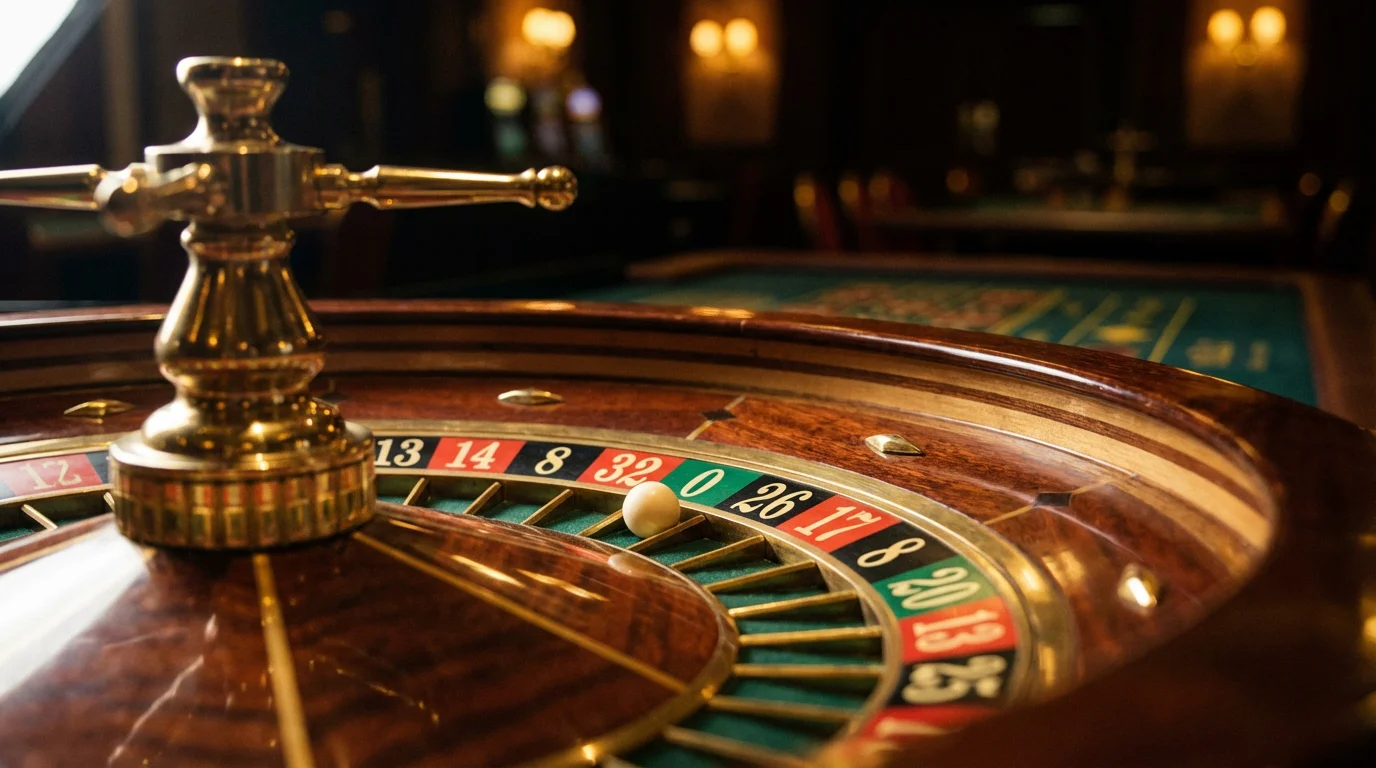
The concept is easier to see in a simple example. European roulette has 37 pockets: numbers 1 through 36, plus a single zero. A bet on any single number pays 35 to 1. If the game were mathematically fair, it would pay 36 to 1 — because there are 36 ways to lose and 1 way to win. The gap between the fair payout and the actual payout is the house edge. On every single-number bet in European roulette, the house keeps 2.7% of the total wagered. Not because the wheel is rigged. Not because the casino is cheating. Because the payout structure is designed so that the operator’s return is baked into the game’s arithmetic.
This principle applies universally. Slots, blackjack, baccarat, poker, sports betting, bingo — every gambling product operates with a built-in margin. The size of that margin varies enormously across game types and specific variants, which is precisely why understanding it matters. A player who knows the house edge on their preferred game can make informed decisions about where to play, how long to play, and what their expected cost of entertainment is. A player who doesn’t know it is flying blind, attributing wins to skill and losses to bad luck, without recognising that the outcome was always tilted in a specific direction.
The house edge is a long-run average, not a session guarantee. Over thirty spins of roulette, anything can happen — you might double your bankroll or lose it all. Over thirty thousand spins, the actual results converge toward the theoretical edge with mathematical certainty. The casino doesn’t need you to lose every session. It needs the aggregate of all players across all sessions to behave according to the numbers. It always does.
House Edge by Game Type
From 0.5% in blackjack to 15% in some keno games — the range is enormous, and the game you choose affects your expected cost more than almost any other decision you make at a gambling site. What follows is a breakdown of the house edge across every major game category available at UK-licensed platforms, using industry-standard figures that apply to properly licensed and independently audited games.
Blackjack carries the lowest house edge of any standard casino game — between 0.5% and 2%, depending on the specific rules and the player’s adherence to basic strategy. Single-deck blackjack with favourable rules can push the edge below 0.5%. The common eight-deck variants found at most UK online casinos sit between 0.6% and 1%, assuming the player follows optimal decisions for every hand. The critical word is “assuming.” Blackjack’s low house edge is conditional on correct play. A player making intuitive decisions — hitting on 16 against a dealer’s 7, standing on soft 17, never doubling when the count justifies it — gives back a significant portion of that mathematical advantage through suboptimal choices. The game’s reputation as the most player-friendly in the casino only holds if you play it properly.
Baccarat is the next most favourable standard game. The banker bet carries a house edge of 1.06%, and the player bet sits at 1.24%. The tie bet — which casinos happily promote because of its dramatic appearance — runs at approximately 14.4%, making it one of the worst wagers available on any table. Baccarat requires no strategy decisions beyond choosing which bet to make, which means the published house edge is the actual house edge for every player regardless of experience level. There’s an honesty to baccarat that other games don’t share: you get exactly what the mathematics promise.
Roulette’s edge depends entirely on the variant. European roulette with a single zero has a house edge of 2.7%. French roulette with the la partage rule — which returns half of even-money bets when the ball lands on zero — drops to 1.35% on those specific wagers. American roulette, with its double zero, jumps to 5.26%. The difference between French and American roulette on even-money bets is nearly four percentage points, which translates to roughly four times the cost per hundred pounds wagered. Any UK player choosing American roulette over French roulette at the same site is paying a premium for an additional zero that offers nothing in return.
Slots present the widest range. The house edge on UK-licensed online slots typically runs from 2% to 10%, corresponding to RTPs of 90% to 98%. The average sits around 4% to 5%, but the distribution is heavily skewed by the thousands of mid-range titles that populate most casino lobbies. The highest-RTP slots — Blood Suckers at 98%, Jackpot 6000 at 98.9% under optimal conditions — exist at one extreme. Branded jackpot slots with RTPs below 92% exist at the other. The slot you choose within a single casino can have a larger impact on your expected cost than switching between casinos. This is worth repeating: game selection within a site often matters more than site selection itself.
Craps, where available online, carries a range of house edges depending on the bet. The pass line at 1.41% and don’t pass at 1.36% are among the best bets in any casino. Odds bets behind the line carry zero house edge — the only true fair bet in any casino game. Proposition bets at the centre of the table range from 5% to 16%. The game’s complexity hides these variations behind a confusing layout, which is why craps is simultaneously one of the most mathematically favourable and most expensive games in the casino, depending entirely on which bets you place.
Keno and lottery-style games sit at the unfavourable end. House edges of 10% to 25% are typical, with some variants pushing even higher. The appeal of keno is the potential for large payouts from small stakes, but the mathematical cost of that potential is steep. For context, a 20% house edge means the game retains £20 of every £100 wagered — ten times the cost of playing European roulette and forty times the cost of optimal blackjack.
Sports betting margins vary by bookmaker and market. On major football leagues, the best UK bookmakers operate overrounds of 2% to 3.5%, implying house edges of 2% to 3.5% on those specific markets. Lower-tier events, niche sports, and exotic multi-leg bets carry margins of 5% to 10% or more. The house edge in sports betting is less visible than in casino games because it’s embedded in the odds rather than published as a separate figure, but it’s just as real and just as consistent.
House Edge vs RTP: Two Sides of the Same Coin
If the RTP is 96%, the house edge is 4%. Same fact, different frame. The two numbers are arithmetically complementary — they add up to 100% — and they describe the same underlying reality from opposing perspectives. RTP tells you how much comes back to the player. House edge tells you how much stays with the operator. The gambling industry has settled on using both, depending on context, which creates unnecessary confusion for players encountering the terminology for the first time.
Casinos predominantly use RTP because higher numbers feel better. A slot displaying “96.5% RTP” communicates something that sounds almost generous. The same slot described as having a “3.5% house edge” communicates cost. Both descriptions are equally accurate. The framing affects perception. This is not an accident. The industry’s preference for RTP over house edge in customer-facing materials is a marketing choice that presents the mathematics in its most flattering light.
For players, thinking in terms of house edge is more useful because it directly answers the question that matters: how much does this game cost me to play? A 3.5% house edge on a session where you wager £500 in total means your expected loss is £17.50. You can calculate this instantly. Doing the same calculation with RTP requires an extra mental step — converting 96.5% to a 3.5% cost before multiplying. It arrives at the same number, but the cognitive path is longer. The players who make the best decisions about game selection and bankroll management tend to be the ones who instinctively think about how much the game takes rather than how much it returns.
Where RTP becomes more intuitive is in comparing games. A 97% RTP slot versus a 94% RTP slot is a clear, directional comparison: the first returns more. Expressing the same comparison as “3% house edge versus 6% house edge” conveys the same information but sounds less like a product comparison and more like a cost analysis. Both framings lead to the same conclusion. Use whichever one helps you make quicker decisions — and understand that the industry will almost always use the one that makes its products sound more attractive.
The Edge Isn’t the Enemy — Ignorance Is
Every informed player understands the cost of playing. The house edge is not a flaw in the system. It’s the system. Without it, gambling operators couldn’t exist, games couldn’t be developed, and the regulated market that protects UK players would have no commercial foundation. The edge is the price of entertainment — structurally identical to the markup on a cinema ticket, a concert entry fee, or any other leisure activity where you pay for an experience without expecting a financial return.
The difference is that gambling wraps its cost in the possibility of profit, which makes it psychologically invisible in a way that other entertainment costs are not. Nobody walks out of a cinema expecting a refund because the film was three stars instead of five. But a gambling session that ends with a loss can feel like a failure rather than a cost, because the theoretical possibility of winning creates an expectation that doesn’t exist in other paid entertainment. Understanding the house edge recalibrates that expectation. It converts gambling from “I might win” to “I’m paying for the experience of playing, and sometimes I’ll come out ahead.” The second framing is more accurate and leads to healthier decisions.
Choosing games with lower house edges is the rational approach for anyone who wants to maximise their playing time per pound spent. It doesn’t guarantee winning sessions. It guarantees that the mathematical friction working against your bankroll is as small as available games allow. Blackjack at 0.5%, French roulette at 1.35%, baccarat at 1.06% — these games cost a fraction of what keno, lottery games, or low-RTP slots cost, and they offer the same fundamental entertainment of putting money at risk against an uncertain outcome.
The players who get into trouble are rarely the ones who understand the edge and play within it. They’re the ones who don’t know the edge exists, or who know it exists and believe they can beat it through pattern recognition, lucky streaks, or some system that has never survived contact with the maths. The house edge is not beatable by recreational players over any meaningful timeframe. It is, however, manageable — and managing it starts with knowing exactly what it costs you to sit at the table.
Find more casino guides at top10gamblingsites-uk. Also read our highest payout casinos.